
Ro (Ro.co) Weight Loss in the Czech Republic: Why It Does Not Work Here and What to Use Instead
Medically reviewed by MUDr. Iveta Novotná, obesitologist
Ro Body is a US-only telehealth weight-loss programme. Why it does not reach Czechia, why Zepbound is called Mounjaro here, and how to continue with a Czech doctor.
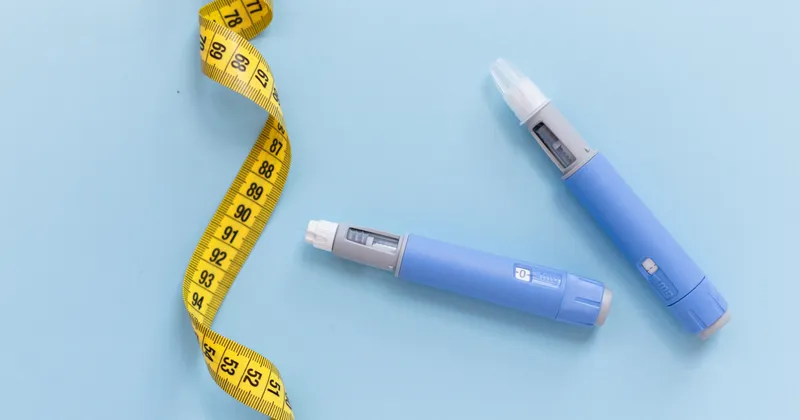
If you were on the Ro Body programme in the United States and you have now moved to Czechia, the question is usually urgent rather than academic: your next shipment is due, the app still loads, and you need to know whether this continues.
It does not. Ro is a US telehealth company, well established in its home market, and its weight-loss programme is built for the American system. The parts of that arrangement which make it work, US-licensed clinicians and US pharmacies posting to US addresses, are exactly the parts that cannot cross the border. Continuing treatment here is a solved problem, just a different one from the one you are used to.
What Ro Body is, and where it operates
Ro launched its Body programme in 2023: a telehealth weight-loss service combining clinical assessment, coaching and, where a clinician judges it appropriate, GLP-1 medication. In the United States that has meant branded products including Ozempic, Wegovy and Zepbound, dispensed by US pharmacies. The whole model sits inside one regulatory system. There is no Czech or EU arm, and the service does not accept patients resident here.
Why the programme cannot follow you across the border
Two independent barriers, either of which would be enough on its own.
Prescribing authority is national. A clinician licensed in a US state may assess and prescribe under that state's rules. That authority does not extend to a patient sitting in Brno. Prescribing here requires a doctor authorised to practise medicine in the Czech Republic. It is the same principle in reverse that stops your new Czech doctor from writing a prescription your old US pharmacy would accept.
Prescription medicines cannot be posted to you here. Under the Medicines Act (Act No. 378/2007 Sb.), distance selling by pharmacies in Czechia covers over-the-counter products only (SÚKL on mail-order dispensing, in Czech). That holds for Czech and foreign pharmacies alike, so the delivery step that made the American subscription convenient is prohibited at this end regardless of who sends it. If a site offers to ship prescription medicine to your Czech address anyway, that offer alone identifies an illegal operation, and our article on illegal online pharmacies targeting Czechia sets out what regulators have found in such parcels.
Your prescription does not transfer either
A US prescription is not a document a Czech pharmacy can dispense against. Czechia participates in the EU cross-border e-prescription arrangement, but that scheme is optional for Czech pharmacies, covers a small set of countries, and is an EU mechanism (ePrescription portal, in Czech). The United States is outside it. A paper prescription from a US clinician does not work either, because the scheme covers electronic prescriptions only.
What works here is a native Czech eRecept, issued by a doctor licensed in the Czech Republic and dispensable at any pharmacy in the country. It identifies you by name and date of birth, so you do not need a Czech insurance number or a rodné číslo to receive one, as our guide to the Czech eRecept system explains.
Whatever supply you brought with you is worth treating as a bridge of a few weeks rather than a plan. Continuing GLP-1 treatment after moving to Czechia covers what to carry, how customs rules differ depending on where you fly from, and how to avoid an interruption.
If you were on Zepbound, look for Mounjaro here
This one catches almost everybody, and it is purely a naming problem.
Zepbound is a United States brand name. The active substance is tirzepatide, and in the European Union that substance is authorised under the name Mounjaro. There is no product called Zepbound on the Czech market, so searching for it will return nothing useful and may push you towards sellers who will happily claim to have it.
The indications are also split differently on the two sides of the Atlantic. In the United States, Eli Lilly markets tirzepatide as Mounjaro for type 2 diabetes and as Zepbound for weight management. In the EU, a single authorisation covers both: Mounjaro is authorised for type 2 diabetes and for weight management in adults with a BMI of 30 or above, or 27 to under 30 with at least one weight-related condition (EMA: Mounjaro). So the European reader asking "can I get Zepbound in Europe" is really asking about Mounjaro, and our article on Mounjaro in Czechia covers its indication, the weekly pen, titration and who may prescribe it here.
The semaglutide products are less confusing, because the names match: Ozempic and Wegovy are called the same thing in both markets. What differs is what each is authorised to treat, and Ozempic carries additional Czech prescribing conditions coded into the eRecept system.
| If your US programme used | Active substance | What to look for in Czechia |
|---|---|---|
| Zepbound | tirzepatide | Mounjaro |
| Mounjaro (US, for diabetes) | tirzepatide | Mounjaro |
| Wegovy | semaglutide | Wegovy |
| Ozempic | semaglutide | Ozempic, with Czech prescribing conditions attached |
Continuing the same active substance under a Czech doctor
Rather than transferring anything, you restart care with a doctor who can prescribe here. With documentation in hand, that is usually undramatic.
The doctor reviews your treatment history, what you currently take and at what dose, how you have tolerated it, your other medicines and your measurements, then decides how to proceed. Continuing the same active substance at the same dose is a common outcome when the records support it, but it is a clinical decision rather than an administrative one, and the doctor may adjust the plan, ask for laboratory results first, or decline treatment.
Dose continuity is where the records earn their keep. If treatment has been continuous and well documented, resuming at your current dose is a reasonable clinical position. If there has been a gap, doctors commonly restart lower and titrate back up, because tolerance to gastrointestinal effects fades once treatment stops and the nausea, vomiting, diarrhoea and constipation that are very common during dose increases can return in full. That is a safety measure rather than a setback, and it is one more reason not to let your supply run out while you sort out paperwork.
The same conversation covers what rules treatment out or calls for caution: pregnancy or plans to become pregnant, breastfeeding, a personal or family history of medullary thyroid carcinoma or MEN2 syndrome, previous pancreatitis and gallbladder problems. The full list for any product is in its summary of product characteristics, published by EMA and SÚKL. If any apply, the answer here may differ from the one you had in the United States.
What to bring
Ask your US programme for these before you lose easy access to the account, in English if you can:
- A treatment summary: when you started, which product, and why anything changed.
- Your current dose and schedule, and the date of your last administration.
- Recent laboratory results, plus any specialist letters.
- A full list of your other medicines, including contraception and supplements.
- Your own record of weight over time and any side effects.
A photograph of each screen or document is far better than arriving with nothing. Official translations are rarely necessary.
On money, expect the structure to differ from the American one rather than simply the totals. A US subscription usually bundles medicine with clinical contact. Here the two are separate: you pay a provider for consultations, and the pharmacy for medicine, which for this class runs to roughly 2,000 – 6,000 CZK per month depending on product and dose, with starting doses at the lower end. Nobody in Czechia is reimbursed for obesity pharmacotherapy, Czech nationals included, so there is no local rate you are being excluded from. What weight-loss treatment costs in Czechia has the detail.
What GoOn sells, and what it does not
We sell consultations. We do not sell medicine, and no Czech provider legally can: medicine is dispensed by pharmacies, on an eRecept, after an individual assessment by a doctor that can end in a refusal to prescribe. That refusal is a real outcome, not a formality.
You do not need a registered Czech GP to be seen, which matters in a country where around 360,000 foreign residents have none (expats.cz). You complete an online questionnaire, then speak to a licensed Czech physician over video in English, at the same price as a consultation held in Czech, with no language surcharge. If you want to know where you stand, you can complete the questionnaire and speak to a doctor online, or start with the BMI calculator.
Frequently asked questions
Does Ro work in the Czech Republic?
No. Ro is a US telehealth service using US-licensed clinicians and US pharmacies, and it does not operate in the Czech Republic or elsewhere in the EU. Neither the assessment nor the prescription is valid here, and the medicine cannot be posted to a Czech address.
Can I get Zepbound in Europe?
Not under that name. Zepbound is a US brand; the active substance, tirzepatide, is authorised in the EU as Mounjaro, which covers both type 2 diabetes and weight management (EMA). Whether it is appropriate for you is decided by a doctor after an individual assessment.
Will a Czech pharmacy dispense my US prescription?
No. The EU cross-border e-prescription scheme does not include the United States, and it covers electronic prescriptions only, so a US paper prescription is not usable either. You need a Czech eRecept issued by a doctor licensed here.
Will I have to start again at the lowest dose?
Not necessarily. With continuous treatment and clear records, continuing at your current dose is normal. After an interruption, doctors commonly restart lower and build back up, because tolerance fades and side effects return. The doctor makes that call.
Do I need Czech insurance or a registered GP first?
No. Registration with a GP is not mandatory in Czechia and is not required for a telemedicine consultation. Obesity treatment is self-pay for everyone here, so a foreign resident pays the same pharmacy price as a Czech patient.